
DuraFlex Chimney Sweep in Mar Vista: A Homeowner’s Guide
If a technician quoted you a DuraFlex liner and you assumed it was a type of chimney sweep, you’re not alone. DuraFlex isn’t a cleaning method at all. It’s a flexible stainless steel liner system used to restore a damaged clay-tile flue, and confusing it with a sweep leads homeowners to postpone repairs that genuinely can’t wait. A chimney sweep cleans the flue; DuraFlex rebuilds its interior surface. Many Mar Vista chimneys need both at the same visit. If you’d rather not sort this out alone, call (855) 337-2073 and we’ll walk through what your chimney actually needs.
What Is DuraFlex, Exactly?
DuraFlex is a UL-listed flexible stainless steel chimney liner. It’s a continuous metal tube that gets pulled down through your existing flue to create a new, sealed path for smoke and gases. It is not a cleaning tool, and it is not a brand of sweep.
Here’s where the confusion starts. Homeowners search for “DuraFlex chimney sweep” expecting a service. What they actually need is a sweep to clear the flue, an inspection to document its condition, and, if the clay tiles are cracked, spalled or improperly sized, a liner system to correct it.
It helps to separate the two jobs clearly:
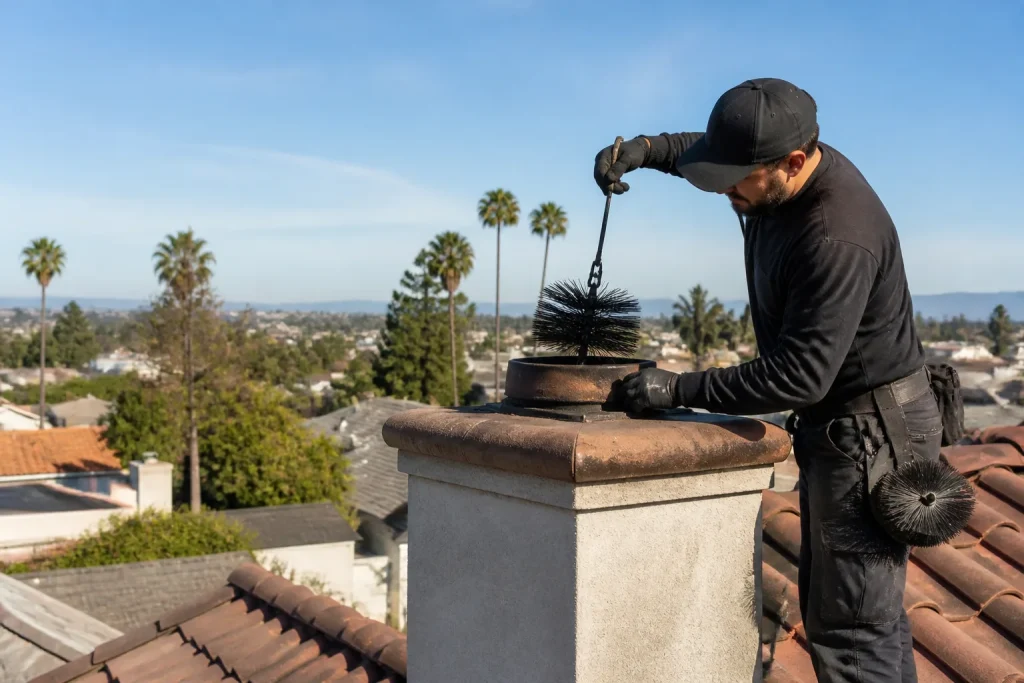
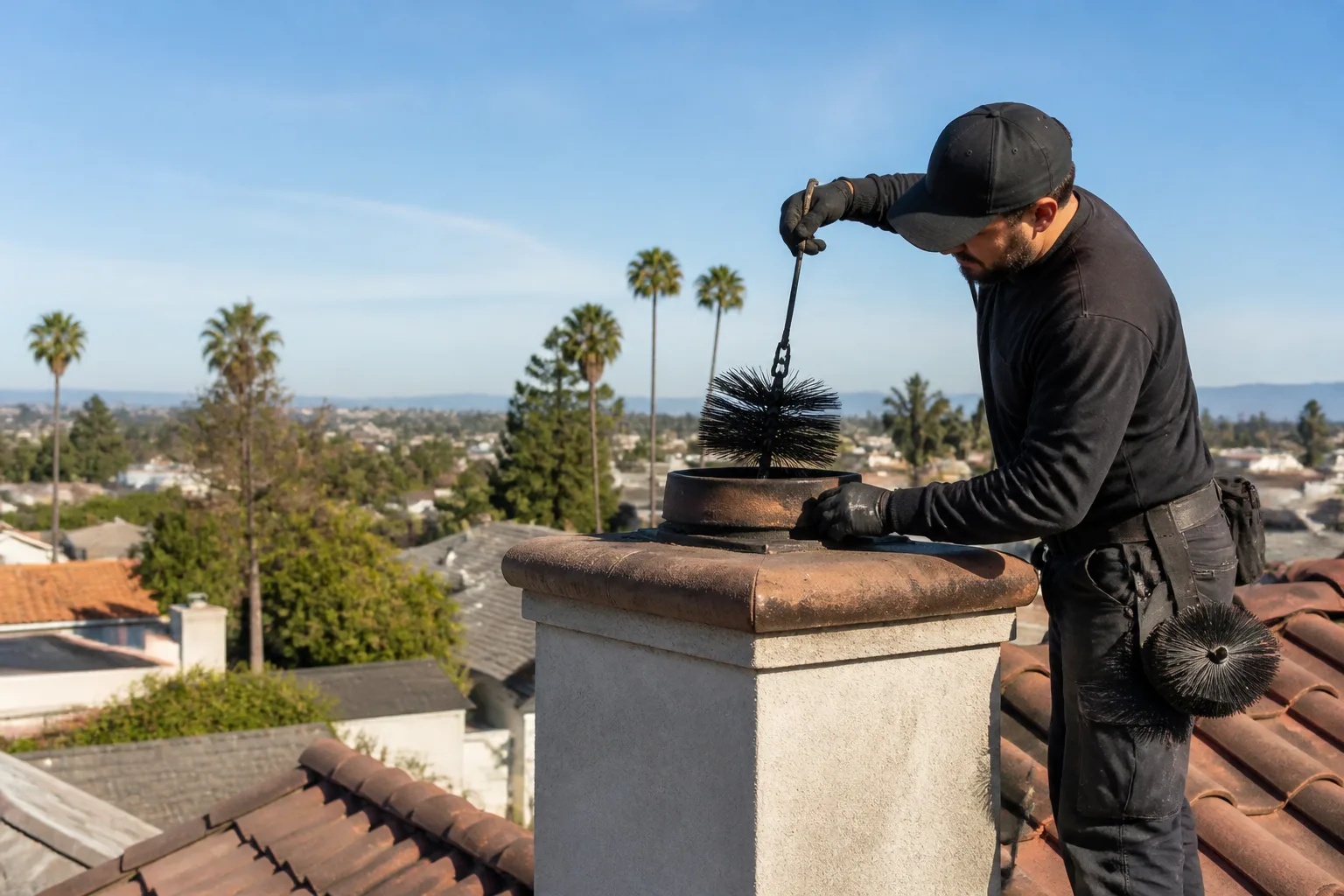
- A chimney sweep removes creosote, soot and obstructions so the flue drafts properly and burns safely.
- A DuraFlex liner repairs the flue itself, restoring a sound, code-compliant path for exhaust gases when the original clay tile is no longer reliable.
In Mar Vista, plenty of homes need both on the same visit. The sweep tells us what’s burning. The inspection tells us whether the flue behind it is still doing its job. When the tiles are compromised, cleaning alone doesn’t fix the problem, and a liner installed onto a dirty flue is a job done wrong. That’s why we sweep first and inspect before anyone recommends a liner.
Our technicians have up to 12 years of experience with these systems, and we install DuraFlex because it’s a professional-grade liner trusted by chimney specialists nationwide, not a generic hardware-store substitute.
When Does a Flue Actually Need a DuraFlex Liner?
A DuraFlex liner is the right specification when the flue has lost its structural integrity and the chimney needs a new sealed interior, but a full masonry rebuild isn’t warranted. An inspection determines this, and it’s the only honest way to make the call.
Here are the conditions that typically point toward a flexible stainless liner:
- Cracked, spalled or missing clay tiles. Gaps let creosote and moisture reach the surrounding masonry, and they compromise the barrier that keeps combustion gases inside the flue.
- An unlined flue. Some older bungalows in Mar Vista were built with no liner at all. A liner brings them up to a safe, modern standard.
- Improper flue size for the appliance. A flue that’s too large for the fireplace drafts poorly and builds creosote faster.
- Offset or angled flues. Flexible liner is designed to follow bends in the flue that a rigid liner can’t navigate.
- Gas appliance conversions. When a wood-burning fireplace is converted to gas, the flue often needs a properly sized liner for the new appliance.
DuraFlex isn’t always the answer. When the clay tile is intact and only the interior surface has deteriorated, HeatShield ceramic resurfacing can restore the liner without a full reline. That’s a less invasive, cost-effective path when the structure is still sound, and it’s one reason we inspect before we specify. If a company recommends a full liner to every homeowner who calls, that’s worth a second opinion.
What Does a DuraFlex Installation Involve?
A DuraFlex job is more than sliding metal into a hole. Knowing what the process looks like helps you recognize a proper installation and ask the right questions before anyone arrives.
In plain terms, here’s how it goes:
- Camera inspection first. We run a camera down the flue and document its condition with photos you can see for yourself, so the recommendation is backed by evidence, not a sales pitch.
- Measure and size. The liner has to match the appliance and the flue; the wrong size drafts poorly and defeats the purpose.
- Prepare the flue. The interior is cleaned and cleared so the liner sits against a sound surface.
- Install the liner. The flexible stainless tube is pulled through the flue and connected at the appliance and the top.
- Insulate and cap. Insulation around the liner improves performance, and the top is finished with a cap. We install Olympia Chimney and Famco caps and covers, so product selection and installation happen in a single visit.
One point for anyone planning a real estate transaction or insurance documentation: a formal inspection is available as a standalone service, separate from a cleaning appointment. You get a documented record of the chimney’s condition, ready for your records, without booking a sweep you didn’t ask for.
Why the Steel Grade in Your Liner Matters
The gauge and alloy grade of the stainless steel are the difference between a liner that serves its purpose and one that fails ahead of schedule. This is also where off-brand substitutes cut corners, and homeowners rarely see it because the metal is hidden in the flue.
Two things drive durability:
- Alloy grade. Chimney liners face heat, acidic condensation and creosote. The grade of stainless used has to tolerate all three over time. Cheaper liners often use a lower grade that corrodes faster under those conditions.
- Wall thickness (gauge). Thinner steel bends and punctures more easily during installation and wears faster afterward. A liner that gets damaged on the way in can’t do its job.
DuraFlex is a professional-grade system specified for exactly this environment. When a quote is dramatically lower than another, the metal inside the flue is usually where the saving came from. Since the liner is buried in the chimney, you want it right the first time. Our approach is the same across the product lines we install: professional-grade materials, sourced and fitted by the same crew. Alongside DuraFlex, we work with HeatShield for liner restoration and Gelco, Olympia Chimney, Famco and Copperfield for caps, crowns and the surrounding components.
Why Mar Vista’s Housing Stock Sees This So Often
Mar Vista’s bungalow and mid-century housing stock is a big part of why DuraFlex comes up in this neighborhood so often. Homes built in these eras often have clay-tile flues that have spent decades absorbing heat cycles, moisture and creosote, and many have been through appliance changes since.
The typical failure patterns we see in Mar Vista chimneys:
- Clay tiles that have cracked or spalled over many heating seasons, letting gases and moisture into the surrounding masonry.
- Flues built before modern sizing standards, now mismatched to what’s actually burning in the fireplace.
- Fireplaces converted from wood to gas without a properly sized liner for the new appliance.
- Caps and crowns that have aged through decades of sun and dry seasons, letting water into the flue and speeding up tile deterioration.
Mar Vista’s dry, mild climate is gentler on chimneys than a cold-winter region, but it hides problems. Because chimneys here aren’t fighting snow and hard freezes, a failing flue can go unnoticed until a crack grows or a draft problem shows up. That’s why a camera inspection matters more than a quick look from the hearth, and why we recommend a chimney cap & crown in good condition as the first line of defense for the flue below it.
When to Call a Pro
Some parts of chimney care are genuinely dangerous to handle yourself. Anything involving the flue interior, connectors, or the top of the chimney should go to a trained professional. A damaged liner or blocked flue can let combustion gases, including carbon monoxide, back into the home, and that’s a hazard no homeowner should troubleshoot alone.
Call a pro if you notice:
- Cracked or crumbling tile visible inside the firebox or flue.
- Smoke rolling back into the room, or a fireplace that drafts poorly.
- Strong creosote odor, especially in warm weather.
- A liner recommendation you can’t verify. Nothing should be recommended without camera evidence you can see, and we’ll tell you plainly when work can safely wait.
If you’re sorting out fireplace or liner issues, our fireplace repair service covers the appliance side, and our team handles the full chimney system, so you don’t need a second contractor for the cap, crown or liner work. For the broadest overview of what we do, start at Chimney Sweep Mar Vista.
The Bottom Line
DuraFlex is a flexible stainless steel liner system, not a cleaning service, and knowing the difference helps you make a sound call on your chimney. A sweep cleans the flue; a DuraFlex liner restores it when the clay tile is no longer reliable. The right choice is always driven by a camera inspection, not a guess, and it’s the reason we document condition with photos before recommending anything. Our technicians have up to 12 years of experience with these systems across Mar Vista’s older homes, and we install professional-grade brands like DuraFlex, HeatShield, Olympia Chimney and Famco because the materials inside your flue are the ones you never get to inspect afterward.
If you’re in Mar Vista and need help, Chimney Sweep Mar Vista offers free estimates. Call (855) 337-2073. We answer 24/7, with fast dispatch from 7am to 7pm, Sunday through Friday.
Frequently Asked Questions
No. DuraFlex is a flexible stainless steel chimney liner system used to restore a deteriorated flue, while a chimney sweep is the cleaning service that removes creosote and soot. Many Mar Vista homes need both at the same visit. Call (855) 337-2073 for a free estimate.
A camera inspection tells you. Cracked or spalled clay tiles, an unlined flue, or a flue sized wrong for your appliance are the usual signs a liner is the right fix. Nothing should be recommended without evidence you can see for yourself. Call (855) 337-2073 to book an inspection.
They solve different problems. DuraFlex handles offset or angled flues and restores a compromised flue with a new sealed interior. When the clay tile is still sound and only the surface has deteriorated, HeatShield ceramic resurfacing can restore it without a full reline. An inspection determines which fits your chimney. Call (855) 337-2073 for a free estimate.
The alloy grade and wall thickness determine how well a liner tolerates heat, acidic condensation and creosote over time. Off-brand substitutes often use lower grades or thinner steel that corrode or damage faster. DuraFlex is a professional-grade system specified for that environment, which is why we install it. Call (855) 337-2073 for a free estimate.
Written by the team at Chimney Sweep Mar Vista.
Need Chimney Cleaning Help?
Call Chimney Sweep Mar Vista - the local pro we connect you with is licensed and insured, here with fast help in Mar Vista.
(855) 337-2073